
Book
Trickster Theatre:
The Poetics of Freedom
in Urban Africa
Indiana University Press
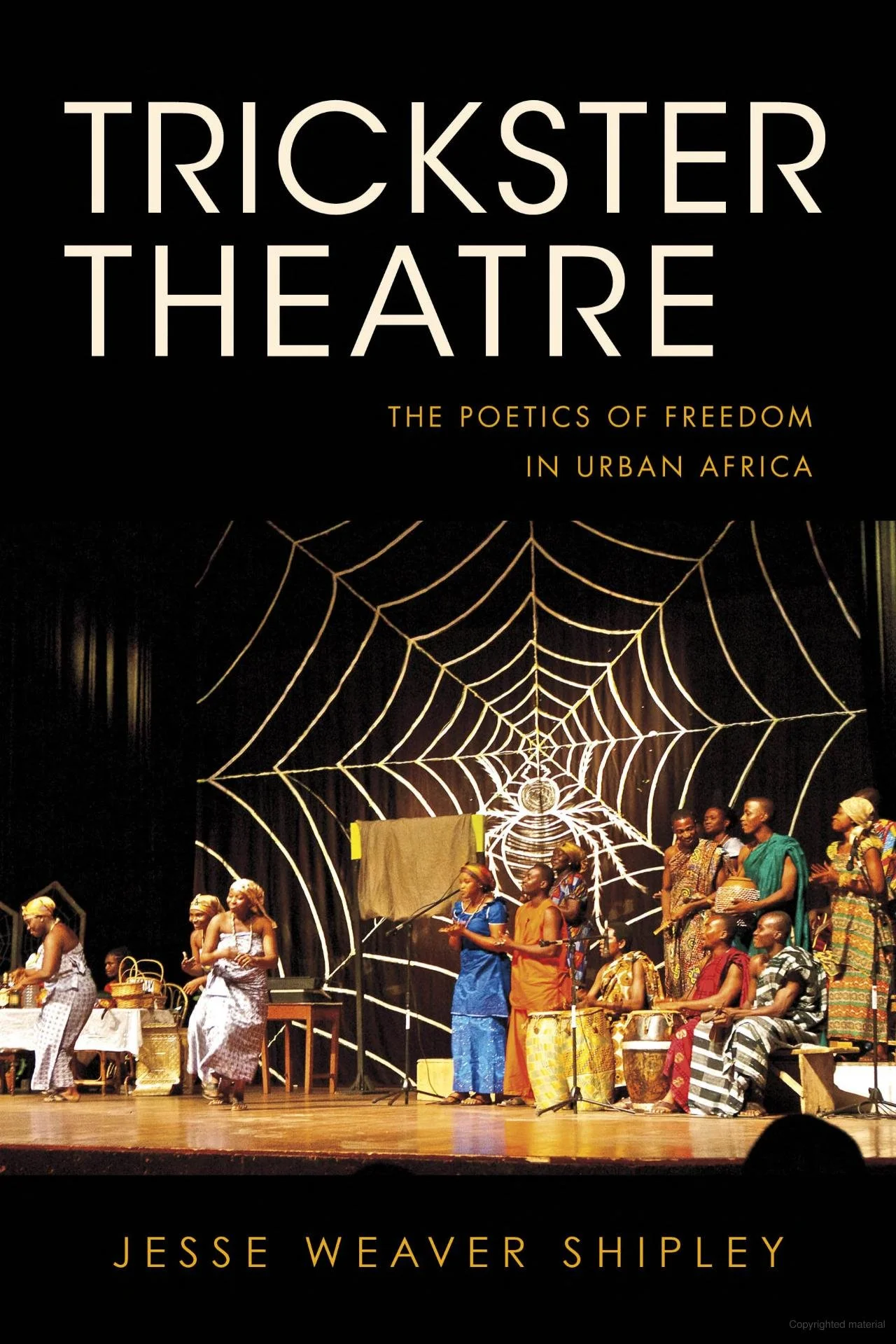
Trickster Theatre traces the changing social significance of national theatre in Ghana from its rise as an idealistic state project from the time of independence to its reinvention in recent electronic, market-oriented genres. Jesse Weaver Shipley presents portraits of many key figures in Ghanaian theatre and examines how Akan trickster tales were adapted as the basis of a modern national theatre. This performance style tied Accra's evolving urban identity to rural origins and to Pan-African liberation politics. Contradictions emerge, however, when the ideal Ghanaian citizen is a mythic hustler who stands at the crossroads between personal desires and collective obligations. Shipley examines the interplay between on-stage action and off-stage events to show how trickster theatre shapes an evolving urban world.
“A rich primary source for urban anthropology in early 21st-century Accra. Effectively shows that theater arts and the National Theatre in particular have been central to Ghana’s cultural and political history.”
“Thoroughly researched, and supplemented by Shipley’s own remarkable fieldwork as both chronicler and performer within the history, this is one of the most sophisticated and thorough volumes on African performance in recent memory. With its rich discussion of millennial Ghanaian performance, this rich primary source is a model of scholarship. . . . Essential.”
“Skillfully argues that trickster narratives and aesthetics continue to frame the tensions between a nationalist ideology of the collective good and a neoliberal ideology of individualism.”